
Picture a dentist in Zürich. She runs a good practice, her patients like her, and business has been steady for years. Then a friend mentions that people have started asking ChatGPT things like "which dentist would you recommend near me," and that the answer comes back with three names. She tries it herself one evening. The AI cheerfully recommends three practices in her neighbourhood. Hers is not one of them.
So she does what any sensible person does. She goes looking for help. And what the market offers her, almost without exception, is a subscription that will tell her, in beautiful colour, exactly how badly she is losing.
There is now a booming industry built around measuring how visible your business is inside AI answers. The tools are slick, the charts are gorgeous, and the biggest of them are worth extraordinary money. What almost none of them do is the one thing our dentist actually needs, which is to change the outcome.
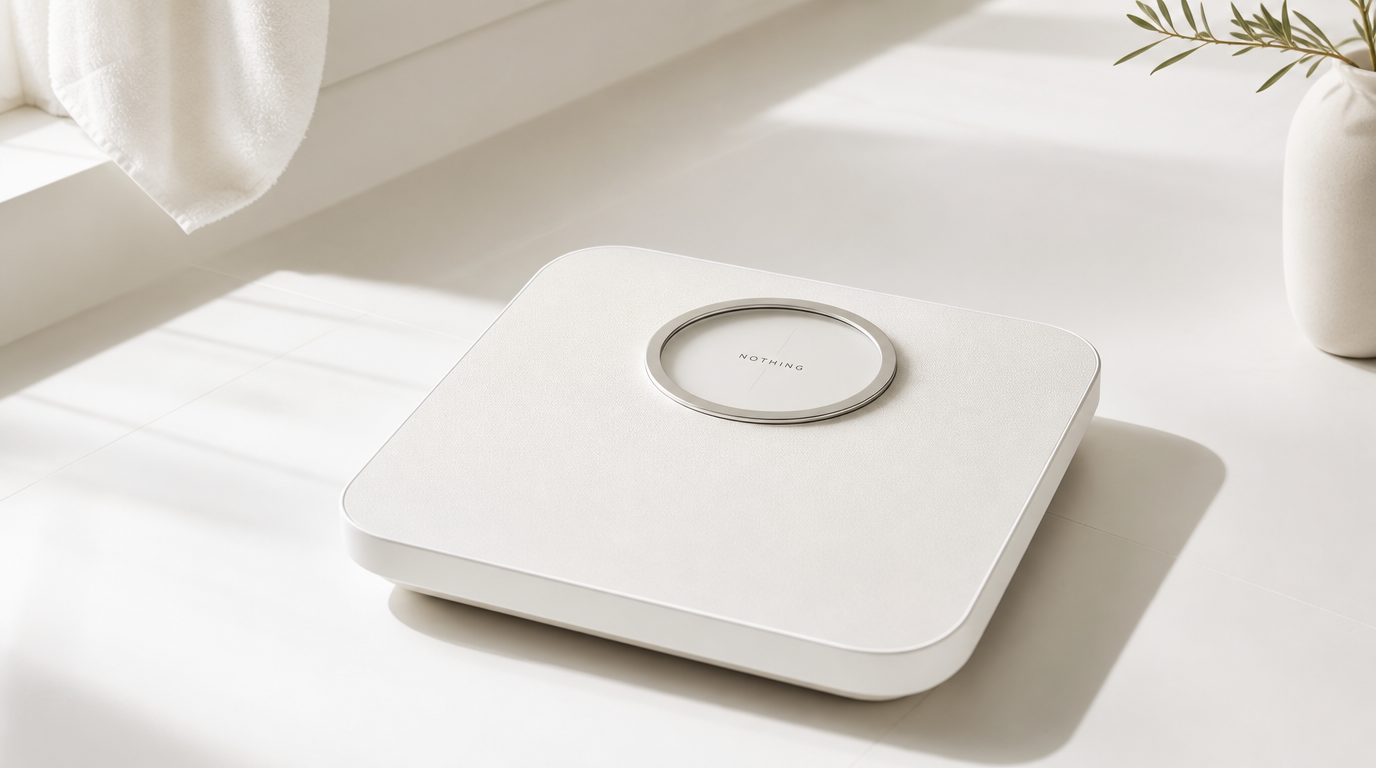
They are a very expensive bathroom scale. They weigh you every morning, they plot the trend, and they will never once help you eat differently.
How an AI decides who to recommend
Start with what is really happening when someone asks an assistant for a recommendation, because the mechanics are simpler than the hype suggests.
An AI does not have a secret ranked list of the best dentists in Zürich. When it gets the question, it reaches for whatever it can find and read about dentists in that area, and most of that is ordinary website text. It reads what each practice says about itself, and then it tries to answer a very human question: can I actually tell what this business does, where it does it, and who it is for?
Think of the AI as someone standing at a counter with a fat stack of business cards, asked to recommend a plumber. One card says "Emergency plumber, Bern and surrounding area, available weekends, burst pipes and boilers." That person gets recommended, because the card answers the question before it is even asked. Another card, printed on lovely heavy stock with an elegant logo, reads "Delivering excellence in integrated fluid solutions since 1998." Beautiful card. Useless card. It gets set back down, because nobody can tell from it whether these people will come fix a leaking radiator on a Sunday.
The lever, the entire lever, is the wording on the card. An AI recommends the businesses it can understand and trust from their own words. If your website never plainly says what you do and where, you are the elegant card that gets put back down.
Meet the industry that sells you the mirror
Now to the tools. It would be unfair to pretend they are frauds, so let me give them their due first, because the honest version of this argument is stronger than the cheap one.
These platforms track how often a brand gets named, cited, and ranked inside AI answers, across engines like ChatGPT, Gemini, Perplexity, and Claude. The category has real money behind it. The market leader has raised around 155 million dollars, reached a one billion dollar valuation, and counts more than 700 enterprise customers, including roughly a tenth of the Fortune 500. The whole sector pulled in more than 300 million dollars in funding between mid 2025 and early 2026. This is not a fringe. This is a gold rush.
And for a giant brand, there is a genuine job being done. If you are a multinational watched across ten different AI models by fifty competitors, the surface is far too large to eyeball, and tracking how your share of those answers moves over time actually informs real decisions. There is even a discovery function worth naming. Sometimes, knowing which questions people ask an assistant tells you which sentences you ought to be writing. If it turns out buyers keep asking "which accountant handles crypto tax in Zug" and almost never ask the generic version, that genuinely should change what an accountant puts on their homepage. That is useful. I am not going to pretend it isn't.
But hold that word, useful, up to the light for our dentist. She already knows what her patients ask. They ask about nervous patients, about weekend emergencies, about whether she takes their insurance. She does not need a dashboard to discover the questions. She has been answering them across a reception desk for fifteen years. The discovery function, the one honest thing the measurement offers a small business, is a function she does not need.
The scale can't even read itself
Here is where the story turns, and it turns hard.
Set aside whether the measurement is useful. Ask instead whether it is even accurate. And it turns out the confident charts are built on a startling amount of guesswork, because most of what they claim to measure is invisible to them.
When an AI mentions your business in an answer and the person just reads it without clicking, nothing lands in any analytics tool. No trace at all. And that silent mention is the overwhelming majority of what happens. One study found that only 12 to 18 percent of citations in Perplexity actually lead to someone visiting the site. Turn that around. Between 82 and 88 percent of the time your business gets named, no measuring tool sees a thing. The mention happened. The measurement didn't.
It gets worse from there. When people use the AI apps on their phones, the visit arrives stripped of any label saying where it came from, so it gets filed under "direct," indistinguishable from someone typing your address by hand. Google's AI Mode goes further still and deliberately removes the source information from its links, which makes that traffic untraceable by design. Add it up and somewhere between a third and two thirds of AI-driven visits show up with no source attached at all.
So the dashboard sells you a precise-looking number for a thing it mostly cannot see. It is a bathroom scale with a cracked display, showing you a confident weight based on a glance at one foot.
Every one of these tools tells you, with beautiful charts, that AI recommends your competitor and not you. What none of them does is fix it, because the fix was never in the dashboard.
That line, more or less, comes from a reviewer whose whole job is ranking these tools. Even the people selling the mirrors admit the mirrors do not comb your hair.
Certainty on one side, fog on the other
Put the two halves side by side, because the contrast is the whole point.
The measurement half is fog. You cannot verify its numbers, you cannot see most of what it counts, and you are paying monthly for a readout that is part sample and part estimate. The remediation half, the wording on your website, is the opposite. You can check it with your own eyes in about a minute. Either your homepage says plainly what you do, where, and for whom, or it does not. There is no sampling error in reading your own opening sentence.
Sit with that asymmetry, because it is the strongest thing in this entire argument. The part of the problem you can actually fix is the part you can see clearly and change this afternoon. The part they charge you a subscription for is the part nobody can see clearly at all. The industry has managed to sell the foggy half as the product and quietly leave the clear, fixable half as an exercise for the reader.
And the diagnosis was never the hard part. Our dentist did not need a tool to tell her she was invisible. She found that out in one evening, for free, by asking ChatGPT a question. What she needs is the cure, and the cure lives in her own words.
What to actually do on Monday morning
Forget the dashboards for a moment and do something almost aggressively simple. Open your own homepage and read it as if you had never heard of your business. Pretend you are a stranger, or better, pretend you are that AI at the counter holding the stack of cards.
In the first two sentences, can you tell what this business does? Can you tell where it operates? Can you tell who it is for? If a stranger cannot answer those three questions from your opening lines, no amount of tracking will save you, because the AI reading your site is exactly that stranger. It is not being clever or hostile. It simply cannot recommend what it cannot understand.
Most of the fix is not code and not money. It is words. It is changing "delivering excellence in integrated dental care" to "we are a dental practice in Zürich, we see nervous and first-time patients, and we keep weekend slots for emergencies." One of those sentences gets you recommended. The other gets your card set back down. The difference costs you an afternoon and a bit of honesty about how you actually talk.
The tracking industry will keep growing, and for the giants it will keep earning its keep. But if you run a small business and you feel the pull of a monthly fee to watch AI ignore you, spend the afternoon instead. Read your own card. Fix the sentence. Then go ask ChatGPT again in a few weeks and see whether it has started to notice you. That costs nothing, and it is the only part of this whole circus that actually moves the needle.
The scale will happily weigh you forever. It is the plate you have to change.